

THE DYNAMICS OF RELATIONSHIP IN THE CONTEMPORARY
PUBLIC SERVICE
By
Professor J. Taiwo Makinde
Department of Political Science/Public Administration
Faculty of Business and Social Sciences
Adeleke University, Ede
At the
Chief Moses Inaolaji Aboaba Trust Foundation (MIATF)’s 4th Annual Lecture
Date: February 4, 2022
Place: Osun State Staff Development Center, Abere, Osogbo
Introduction
It is a great honour to be called upon to deliver this lecture, considering the caliber of the
organizers and the guests. Thank you for this opportunity.
The topic of this lecture - dynamics of relationship in the contemporary public service - is
suggestive of the fact that there is a difference between the public service in existence between
1960 and, say, 1976, a year that affected the public service negatively. This was the period of
Murtala Muhammed/Obasanjo’s military intervention. This was the time the civil service got an
unprecedented shake-up that brought some negative changes to the psyche of public servants.
This was a year that many civil servants were retired or dismissed with immediate effect (with or
without benefits). It is 1976 up till the present time that I consider to be the period of
contemporary public service. Prior to 1976 in Nigeria, the public service was relatively stable.
There was tenure of office; there was less corruption, and there was a better dedication to duties
on the part of public servants. The relationship issue was not much of a problem because there
was less friction between the politicians and the bureaucrats, and there was true federalism.
However, in the contemporary public service, the story has changed because of many anomalies
that have crept into the public service. The topic of the lecture is therefore very germane to the
situation in the public service in Nigeria at the moment, especially as the dynamics of
relationship spread over different areas, namely:
- - Political /career officer’s relationship;
- - Politician and higher civil servants’ relationship in the policy and decision making process;
- - Various civil service Rules and Regulations governing relationship among staff and with the public;
- - Organizational relationship among MDA/Parastatals; and
- - Intergovernmental relationship (Federal-State-Local government).
Before going into the specific topics in this lecture, how would we define the concepts of “public
service” and “relationship”? A public service is a service intended to serve all members of a
community. Public service includes services provided by a government to people living within
its jurisdiction, either directly through public sector agencies or by financing provision of
services by private businesses or voluntary organizations. The country’s government
bureaucracy is the public service because government, at whatever level, enunciates and
implements its policies, programs and projects through the instrumentality of the public service.
By this, we mean the political appointees and the bureaucrats. The contemporary public service
includes the civil service and the MDAs/Parastatals. The people providing the various services
in the public service are the public servants, i.e. political office holders and the bureaucrats, in
the civil service and in the various ministries, departments and agencies. The process of service
provision by the public servants involves interactions at different levels. This is the point at
which relationship comes in. How then do we define “relationship”?
Relationship can be defined as a connection between two people or things. Four basic types of
relationship are identified here. They are family relationship, friendship, acquaintanceship, and
business relationship. Business relationship can also be equated with official relationship
especially when discussing issues in the public service. For this lecture, the last type which is
business relationship/official relationship is the most appropriate. Our discussion shall begin
with focus on political/career officers’ relationship:
Political /Career Officer’s Relationship:
Adamolekun (1983) used the terms “joint effort”, “cooperative effort” and “partnership” in the
discussion on the above subject matter. These terms were used in respect of leadership roles of
politicians and bureaucrats; simply put, the administrators. He realized that in reality, there are
considerable conflicts in the interactions between politicians and administrators at the different
levels of government. Since these two categories of officers have to work together, the task for
any analyst is to find out how best to maximize cooperative interactions while reducing the
occasion of conflict.
A crucial factor in our discussion on the above relationship concerns the actors. For instance, at
the local government level, the Chairman and Secretary are the political actors while the Head of
Personnel Management, the Director of Finance; Heads of Departments etc. are the
administrative actors. Also, at the state government level, as well as the federal government
level, there are political actors as well as administrative actors. Problems arise when there is a conflict of interest between the political actors and the administrative actors making the
relationship to be conflict-ridden. For example, when politicians want to work towards fulfilling
their electoral promises, whether such action is appropriate or not, it can bring conflict because
any attempt by the administrator to go against such decision by the politicians usually leads to
disagreement. For example, the Local Government Chairman may decide to cite four boreholes
in his Ward to ensure that he is re-elected, even though this particular Ward already has more
boreholes than the others in the Local Government. The fact is that the Chairman might have
promised his Ward of providing such facilities during his electioneering campaigns. His concern,
therefore, will be focused on how to fulfill his promises even when some other Wards have
greater needs of boreholes in their communities.
Another area of conflict may be in the area of personnel. This is a very sensitive area because
the quality of job performance in any organization depends on the quality of the personnel.
While the administrator may insist on merit for recruitment of personnel, the politician may want
to give political consideration such as federal character, allegiance to party, etc. In the case of
the above, there should be a meeting line, which will not deviate completely from the rules and
regulations guiding recruitment of staff. This will, at least, satisfy both the administrators and
the politicians since neither will feel totally rejected.
There is also fiscal relationship between the politician and the administrator which can result in a
conflict especially when it comes to the matter of disbursement of funds. While the politician
may want money disbursed to him quickly whenever he needs it, the administrator will, more
often than not, prefer to let application for such funds go through all the necessary procedures in
order to satisfy professional ethics. The administrator would want to ensure compliance to the
Financial Instructions (FI).
In the area of budgeting, both the administrators and politicians work together to come up with
the budget for the year. Apart from the politicians making up the executive arm of government
that jointly prepare budget with the administrators, the politicians in the Legislative arm play
important role in this wise. More often than not, conflicts ensue during budget
consideration/authorization, implementation and monitoring. The role of administrators in
budgeting, especially the paperwork that always requires technical expertise of such officers, is
of immense importance. On the other hand, the authority/approval, as well as monitoring that
must be given by the politicians (legislature), is as required by the Constitution.
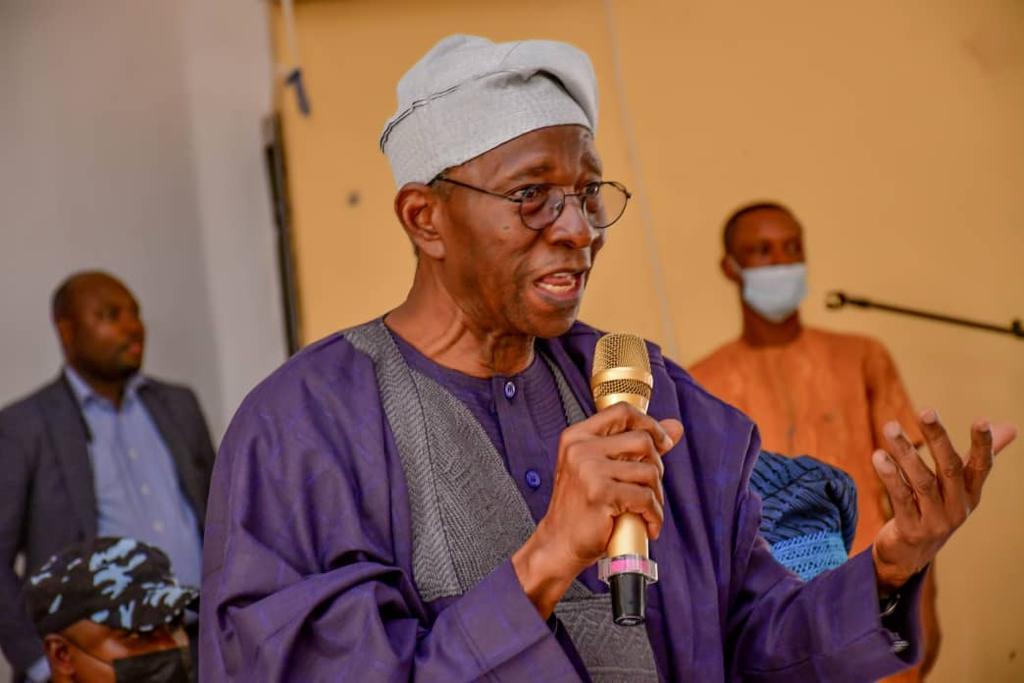
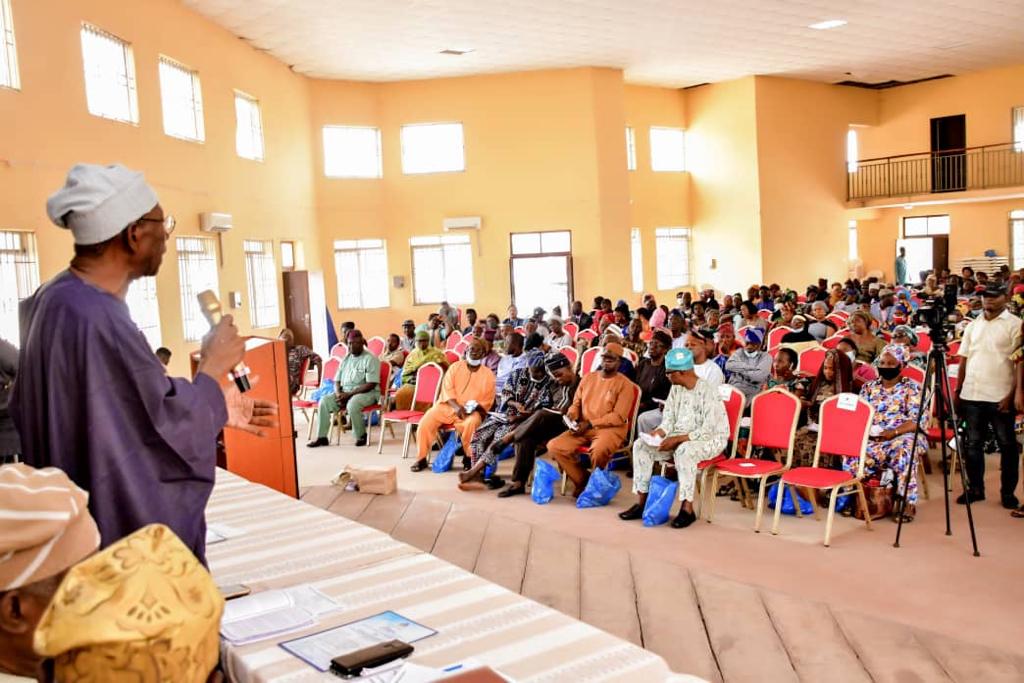
How can we maximize cooperative interaction under the situation discussed above and reduce occasion of conflict? Both the politicians and the administrators need to be adequately equipped.
- The politicians are supposed to recognize problems that require technical expertiseand, by so doing, give unto Caesar what belongs to Caesar.
- In like manner, those in the administrative team need to be trained and socialized into administrative culture that enables them to acknowledge the dominant role of politicians in respect of political judgment.
- For a successful administration at any level of government, both the politicians and the administrators have their own contributions to make; the two cannot reallybe separated from one another. Woodrow Wilson in 1887 tried to propagate the politics/administration dichotomy by claiming that administration lies outside the proper sphere of politics; his idea of politics/administration dichotomy was supported by Frank J. Goodnow who made a technical distinction between politics and administration referring to politics as “the expression of the will of the state” and “administration as the execution of that will”. However, Fred Riggs contended that politics cannot be divorced from administration because of the interrelationship between public administration and politics. This contention enjoys the support of some contemporary scholars, such Nigro and Nigro who saw Woodrow Wilson’s politics/administration dichotomy as being “fictional”. What is needed, therefore, is the ability for the two categories of officers to cooperate with one another.
- In order to ensure cooperative interactions among politicians and administrators inthe Nigerian context, it is essential to focus attention on defining the respective roles of a political officer and that of the administrator.
- Those elected, selected, or appointed into political posts should be prepared toperform satisfactorily the roles expected of them. The education and training programmes for civil servants should also seek to initiate them into their future roles.
- There should be training and retraining of administrators for effective performanceof their duties. Also, regular seminars/workshops for political office holders should beput in place at the different levels of public service – local, state and federal- to enable them differentiate between what is expected of them and what is expected of the administrators.
This takes us to the issue of politicians and higher civil servants‘ relationship in the policy and decision making process.
Politician and higher civil servants relationship in the policy and decision making process
One of the most important aspects of administration is policy and decision making. Policy is the
object, tool and means of governing. Its concept is central to governments, organizations and
communities. Policy also refers to action taken or not to be taken by government. For this
important aspect of administration, actors are involved – government and non-government. The
government actors include the Higher Civil servants as well as the executive, legislative and the
judiciary, while the non-governmental actors include the political parties, interest groups, the
citizenry as well as experts and professionals. For this lecture, government actors will be
restricted to the Higher Civil Servants who are also known as the bureaucrats in top position such
as Permanent Secretaries and Directors in various Ministries or Directorates, as well as the
politicians who are elected, selected or appointed into public office by the political parties in
power. At the state level, they are the governor and the Commissioners, while at the federal
5
government level they are the President and the Ministers. We shall now briefly look into policy
and decision making process.
The policy and decision making process,
Policy process refers to activities involved in the making of decision to policy adoption,
formulation, implementation and evaluation. At the decision-making stage, many things are
involved especially on the part of the decision maker - the politician and the bureaucrat.
Decisions taken by either the politician or the bureaucrat are influenced by their values and
preferences, which may be conflicting. The politician will want to take decision that will
enhance his opportunities in his constituency based on the election promises made by his
political party. Such decisions may not necessarily be well taken by the bureaucrat who will be
more interested in the rules and regulations that will ensure the smooth-running of the
administration. This lecture will focus only on the formulation and the implementation stages.
The evaluation stage usually involves professionals.
At the formulation stage, the governmental actors are proximate actors because they occupy
formal public positions and are therefore directly connected to, and very influential in, the policy
process. They are the actual policy makers who occupy the policy making positions. These are
the receptors and converters of environmental demands and pressures into policies. They have
their own institutional and individual perceptions, attitudes, values, beliefs and interests that are
brought to bear on policy making. The politicians and the higher civil servants belong to the
governmental actors and they interact at the level of deciding on what should be packaged into
any policy to be formulated.
As discussed earlier, when environmental demands come in through the politician, the way he
handles such will be determined by his values, beliefs and interest which, definitely, will tilt
more towards his political interest. On the other hand, the higher civil servant will want to
handle such demands administratively following the rule of laws. At this stage, the higher civil
servants offer advice. Given the fact that, largely, the bureaucrats possess the expertise, the
skills, the competence and the experience needed to come up with good public policy, politicians
may sometimes see them as a threat to their political interest.
At the level of implementation, the bureaucrats are strategically placed because of their expertise
and the skills earlier mentioned. The success at this stage depends on the cooperation given by
the bureaucrats. They are the ones that fill in details as well as interpret the policy and apply it to
specific cases and situations. The lecture now moves on to the rules and regulations governing
relationship among staff and with the public.
Various Civil Service Rules and Regulations governing relationship among Staff
and with the Public:
Public service rules refer to a set of laws guiding the conduct of public servants for effective and
efficient performance of their duties. For effectiveness and efficiency in the public service, it is
important that public servants develop positive interpersonal relationship and not the toxic
relationships that repel. There is therefore the need for public servants to learn to treat people
within the service and outside the service with courtesy, respect and dignity. When it comes to
relationship among staff and with the public, the public service ethics is very relevant. Public
service ethics focus more on relationship among staff and with the public.
In the public sector, ethical codes address the fundamental premise of public administrator’s
duties as a steward to the public. The public service code of ethics is aimed at protecting the
public servants’ status as well as observing fundamental rules governing correct conduct. The
public service requires standards of professional behaviour from employees in order to promote
and maintain public confidence and trust. Therefore, public servants are not expected to set
themselves above the people and this is where their relationship with the public comes in. At the
same time, for effective and efficient performance of their duties as public servants, there will be
interactions among staff. Because of these unavoidable interactions, some important ethical
issues will be discussed. These come under the public service code of ethics. They include the
following:
- Transparency
- Discipline
- Beneficence
- Fairness
- Integrity
- Respect for individual autonomy
- Respect for the Constitution
- Confidentiality
- Impartiality
- Frugality
- Accountability

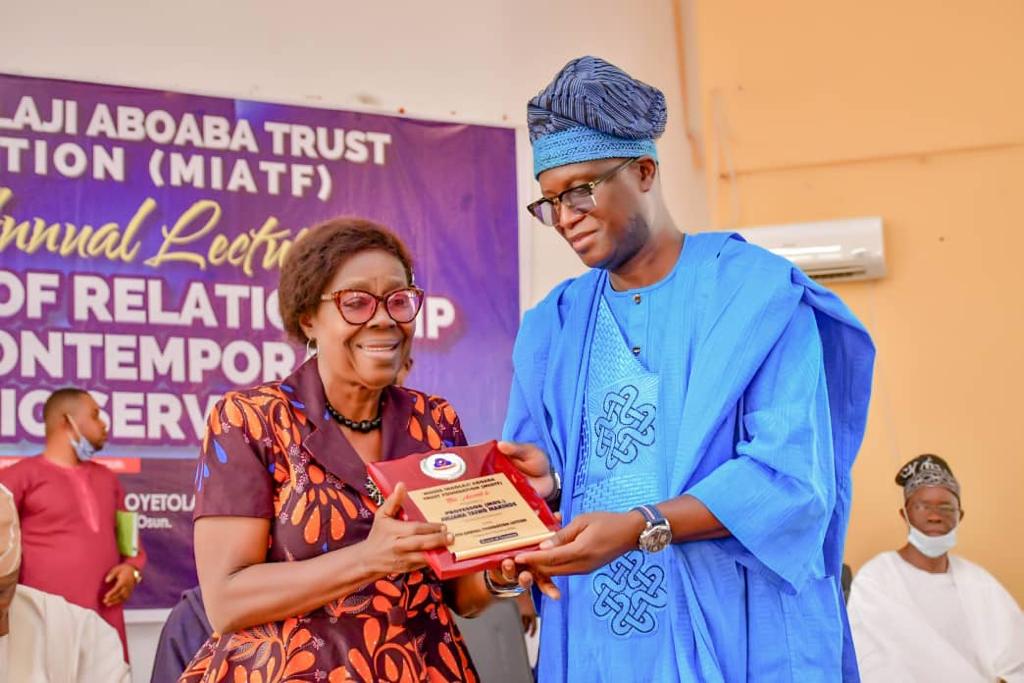
- Transparency: public servants are expected to be transparent in all their dealings because this is one of the things that can guarantee good performance in the discharge of their duties.
- Discipline: Public servants are expected to be disciplined in the conduct of official duties as well as in their use of language
- Beneficence: This means showing active kindness, generosity and benevolence to others especially in form of preventing and alleviating others’ suffering, meeting the needs of the most vulnerable, promoting others’ happiness in the work environment.
- Fairness: Treating people the way they deserve to be treated; as having equal rights unless merit or need justifies special treatment. This is particularly important In the areas of selection and recruitment, promotion, training remunerations, transfers, retirements, etc.
- Integrity: Upholding their obligations in. spite of personal inconvenience. Ethics is about putting principles into action. Consistency between what we say we value and what our actions say we value is a matter of integrity.
- Respect for individual autonomy: Not manipulating rational individuals even for their own good. Most of the time, when people are not allowed to use their discretion and judgment, it may lead to frustration and, sometimes, disillusionment.
- Respect for the Constitution and other laws enacted by legitimate government bodies: The Public Service Rules that guide the day-to-day administration and operations of the public service must be respected and followed to the letter in order to avoid unnecessary criticisms.
- Confidentiality: This is a major aspect of civil service work ethics not to divulge official secrets for personal reasons
- Impartiality: Civil servants have the duty to carry out their tasks with strict impartiality, especially when dealing with individuals. It is unethical to bring in discrimination on political, religious, ethnic or gender considerations.
- Frugality: It is the art of being thrifty, prudent or economical in the consumption of consumable resources such as stationeries, as well as other material resources
- Accountability: This means answerability. Public officials should be accountable to their actions and inactions. It is the prerequisite foundation for the success of good governance. Accountability constitutes an integral concept of the administration of modern society. Where there is accountability on the part of the politicians and government officials, there will be efficient and effective allocation of resources needed to provide the necessary services which can culminate into development.
The General Order (GO) which is like the Civil Service Bible is a useful document even when it
comes to the issue of relationship among staff and with the public. Successful relationship
as well as the guidelines in the General Order. Successful relationship among staff and with the
among staff and with the public depends upon the public servant adhering to these ethical rules
public depends upon the public servants adhering to these ethical rules
The next topic to be discussed relates to organizational relationship among MDAs/Parastatals.
Organizational Relationship among MDA/Parastatals:
An organizational relationship is a one-to-one relationship between businesses to allow users in
each organization to view calendar availability information. This lecture is focusing on
MDAs/Parastatals since the lecture is on relationship in the public service.
MDA refers to Ministries, Departments and Agencies. In the contemporary public service, there
are more MDAs/Parastatals than we had prior to 1976. Presently, there are various MDAs,
namely, Ministries, Departments and Agencies. Examples of Ministries are: Ministry of
Finance, Ministry of Education, Ministry of Health, Ministry of Information, Ministry of Women
Affairs and Social Development, among others. Under these Ministries are some departments
and agencies such as Budget Office (under Ministry of Finance), ITF (Industrial Training Fund)
under the Ministry of Education, NAFDAC (National Agency for Food & Drug Administration
and Control; National Health Insurance Scheme (NHIS) both under the Ministry of Health,
Federal Radio Corporation of Nigeria, News Agency of Nigeria (under the Ministry of
Information). Other government agencies are Bureau of Public Enterprises (BPE); Central Bank
of Nigeria (CBN)
Parastatals, on the other hand, differ from MDAs. Unlike government
ministries/departments/agencies, they are company agencies or intergovernmental organizations
that possess political clout and are separate from the government, but whose activities serve the
state either directly or indirectly while Ministries are government departments at the
administrative level, normally headed by a Minister. Parastatals are usually headed by
Chairman/Chief Executive Officer (CEO). Examples of government parastatals are
Administrative Staff College of Nigeria (ASCON) headed by a Director-General, Corporate
Affairs Commission (CAC) headed by a Chairman and closely assisted by the Registrar
General/CEO, among others. Others are ICPC (Independent Corrupt Practices and other Related
Offences Commission) headed by a Chairman, and EFCC (Economic and Financial Crimes
Commission) also headed by a Chairman. These two parastatals are established to fight
corruption in Nigeria. Having established the difference between the MDAs/Parastatals, let us
quickly look into the relationship among them.
Relationship between MDAs/Parastatals
It appears that the relationship between them is unhealthy. It was reported that the Secretary to
the government of the Federation (SGF), Boss Mustapha, “decried what he described as
unhealthy and poor relationship existing between governing boards of government Ministries,
9
Departments and agencies and their Chief Executive Officers in the country”. For example, the
relationship between ICPC and EFCC cannot be described as being healthy because it appears
that both do not share information with one another despite the fact that their assignments appear
to look similar. What Boss Mustapha decried may be referring to inter-organizational
relationship as shown by the example of ICPC and EFCC. As for intra-governmental
relationship, this may be assisted by some of the highlighted public service ethical codes earlier
discussed as well as the under-listed points which are expected to help in building organizational
relationship generally. The points are -
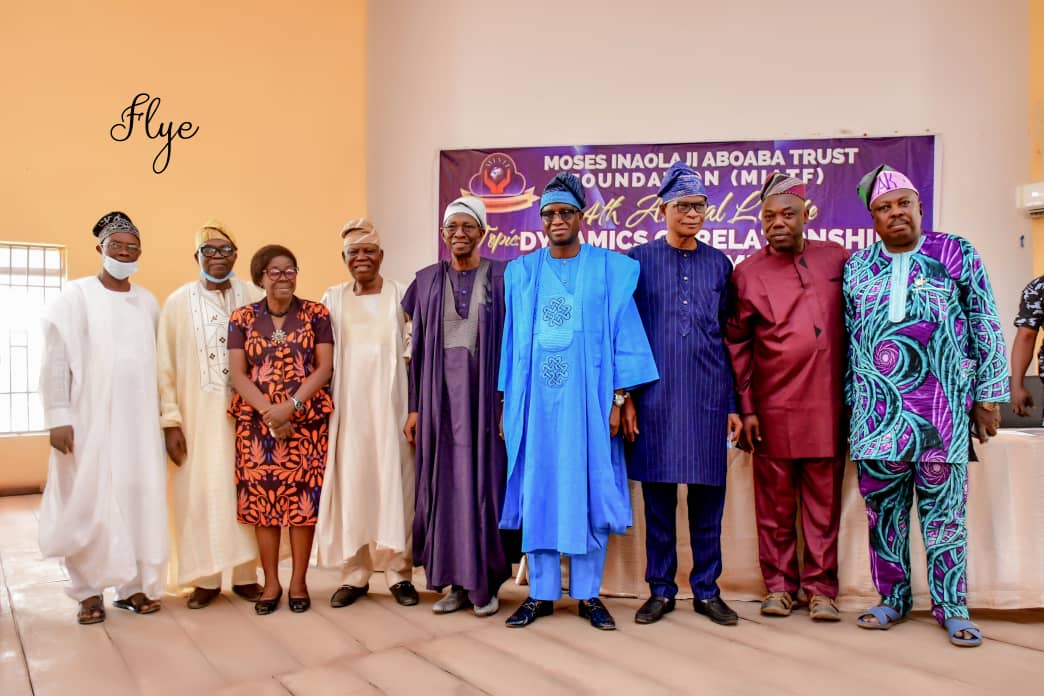

- connect everyone to the mission and strategy;
- create effective conversation with each worker to help them express what they will contribute or accomplish; and
- build transparency as an essential tool for the effective discussion and relationship.
However, it appears that the above are not seriously adhered to in these MDAs /Parastatals. It is
therefore not surprising that the SGF complained about the poor relationships existing among the
members of Board of Directors and the CEOs of some of these MDAs/Parastatals.
Let us briefly look into the issue of intergovernmental relationship between Federal-State and
Local governments. This aspect of the lecture is very important in the sense that it is very
relevant to good governance in the country. Where there is poor intergovernmental relationship,
almost everything called governance is negatively affected. Under IGR, two key variables
emerge, namely, federalism (general) and fiscal federalism.
Intergovernmental relationship (Federal-State-Local government):
What is intergovernmental relation (IGR)?
- IGR is the interacting network of institutions at national, state and local levels.
- It is created to enable the various points of government to cohere in a manner more or less appropriate to run institutional arrangement.
- It is an interaction that takes place amongst the different levels of government within a country – federal, state and local.
Major issues in IGR are “federalism” and “intergovernmental fiscal relations”.
Federalism is:
- A system of authority constitutionally designed between central and state governments
- It represents a principle for the organization of decision-making in an association of groups of people within a nation state
- It emphasizes the sharing of power in political system between the central government and other units of government
- Federalism recognizes and respects the co-existence of concurrent government as against unitary system
- Its distinctive characteristic is its non-centralization
- Federalism is also the allocation of authority and responsibility to different levels of government. The major challenge to federalism is that of intergovernmental fiscal relations.
Intergovernmental fiscal relations
- It is the idea of how money is raised through taxation and spent through appropriation.
- Fiscal federalism concerns the division of public sector functions and finances among different tiers of government.
- A federal fiscal system comprises of two parts –
IGR Tax Jurisdiction
IGR Revenue Allocation
The Nigerian Constitution as regards Intergovernmental Fiscal Relations (IFR) in Nigeria:
- allocates to each level of government their IGR Tax Jurisdiction
- allocates to each level of government their IGR Revenue Allocation
- By implication, the Constitution dictates the financial functions and operations of government; therefore, the Intergovernmental Fiscal Relations between the various levels of government is a function of what is in the Constitution.
The 1999 Constitution, Part II, Sections 4 & 5 stipulates the powers of the three levels of government. The Second Schedule (Part I) itemized the Exclusive Legislative List – Federal (68 items) while Part II itemized the Concurrent Legislative List - State (30 items) and the Fourth Schedule itemized the functions of the Local Government. Some of the functions under the Exclusive List are the following:
Military (Army, Navy and Air Force)
Labour
Maritime
Some of the items under the Concurrent Legislative List which allow both the federal and state governments to share responsibility are:
Health
Education
Infrastructure
Agriculture
Collection of taxes; etc.
Functions of the Local Government (Residual) include -
Rural development
Social Welfare, among others
Having discussed the two major variables under IGR, i.e., federalism and the issue of fiscal
relationship, how can we rate the relationship existing among the three tiers of government? The
relationship is one of imbalance based on the constitutional allocation of jurisdictional powers.
The Constitution has given so much power to the federal to the detriment of the state and the
local governments. Besides, it is so evident that true federalism is not practiced in Nigeria.
What exists in Nigeria currently is “federalism” on paper, not in practice. The type of federalism
being practiced in Nigeria does not allow states to grow at their own pace and there is no
autonomy as expected from true federalism. There is no fiscal independence. At the end of every
month, states go, cap in hand, for revenue allocation which is not even shared according to what
each state contributes. The states are very dependent on the federal and this has hindered the
development of many of the states which rely solely on federal allocation that makes them not to
be innovative in their revenue drive. It is therefore not surprising that Akindele (1994) referred
to Nigeria as “a unitary country in a federal union”. The above analysis shows that even at the
intergovernmental relation level, the relationship is skewed favoring the federal at the expense of
the other levels of government.
Conclusion:
The various sub-topics of this lecture point to one thing. They point to the fact that at the
different levels in the contemporary public service, the relationship existing between the
political/career officers is full of conflict; that which exists between the politician and higher
civil servant as regards policy and decision making process is not devoid of conflict, the
relationship that exists among MDAs/Parastatals was decried as being unhealthy while the
relationship existing among the three tiers of government as reflected in intergovernmental
relations is also full of conflict especially as regards the practice of federalism and the
intergovernmental fiscal relations. The most serious conflict which arises from the practice of
federalism in Nigeria has actually resulted in agitation from different ethnic groups who feel
cheated.
What, then, is the way forward?
- Training and retraining of higher civil servants for effective performance of their duties, as well as regular seminars and workshops for the political office holders.
- Enforcement of rules and regulations of the public service through giving appropriate punishment to erring officers
- Seminars/Workshops for the Heads of various Ministries, Departments and Agencies, as well as Heads of Parastatals to ensure that there is healthy interactions among them
- Review of the Nigerian Constitution as regards the allocation of powers to the different levels of government.
- Most importantly as regards IGR, there should be restructuring in order to gain the trust of the various groups that are agitating for balance of power between the state and the federal government.
Ladies and Gentlemen,
I welcome you to the Contemporary Public Service in Nigeria where relationship is less cordial
between political and career officers; where it appears that there is less commitment to rules and
regulations governing relationship among staff and with the public; where there is poor
relationship among MDAs/Parastatals and where there is no true federalism which is a core
aspect of intergovernmental relations (IGR). Welcome to the new or contemporary public
service, the Nigerian experience.
THANK YOU FOR LISTENING